Learning vocabulary is not just collecting words for a trip or a job interview. Done regularly, it is steady mental work: noticing meaning, pulling words out of memory and choosing the right one. Here is what that practice exercises, how it can make your speech clearer, and how to build the habit without overload.
Waiting for funny, shocking or dramatic words to stick on their own is learning on hard mode. A clear decision to remember a small set of words, followed by recall and spaced practice, works far more reliably. Here is why, and how to turn it into a routine that survives ordinary days.
English is not short of words. The problem is getting the right ones in a sensible order without drowning in tabs. Here is why a curated ESL pack for American English works better than collecting lists, what ten themed sets cover, and how to study them without burying yourself in reviews.
Most vocabulary methods feel productive while you use them and leave nothing behind a week later. Here is how the popular ones actually compare, and which one deserves to be your base.
You understand plenty of words and none of them show up when you speak. That is not talent, it is the direction you have been practicing. Here is how to fix it.
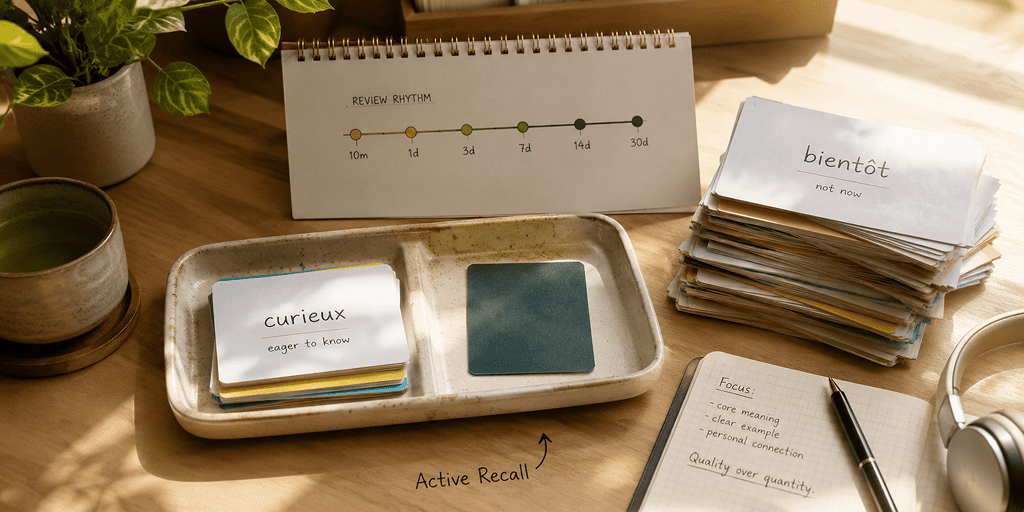
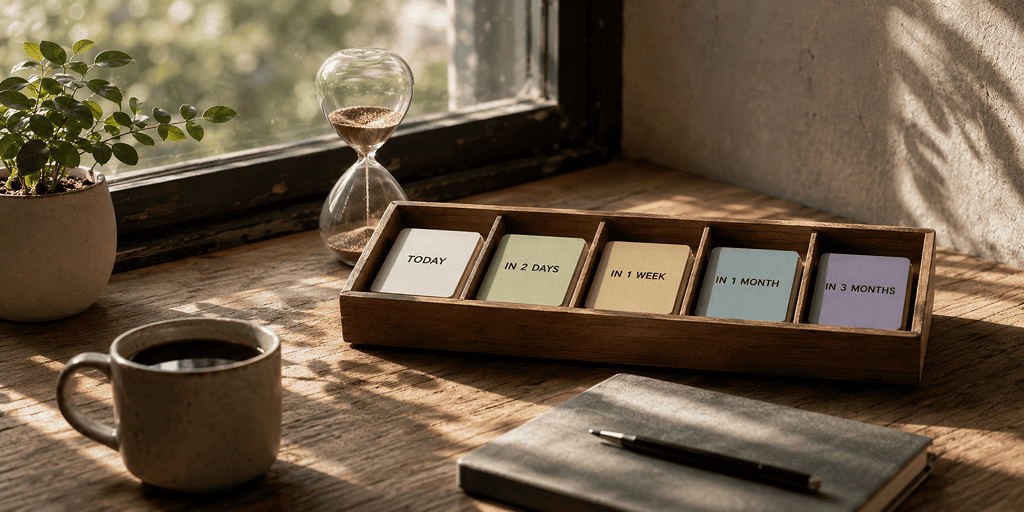
If you repeat a word ten times today and blank on it next week, nothing is wrong with your memory. The timing is wrong. Here is how the daily queue fixes it.
If you can explain the tenses and still freeze mid-sentence, the problem is usually not your level. It is that the words are not available fast enough. Here is how to treat vocabulary as its own project: cards instead of lists, both directions, and a daily loop that survives a busy week.
You are not bad at languages – your brain is just following the Ebbinghaus Forgetting Curve. Learn why new words fade so quickly and how spaced repetition in My Lingua Cards brings them back right on the edge of being forgotten.
Stop wasting time cramming! Learn the single, scientifically proven method to beat the Forgetting Curve and move vocabulary from short-term to long-term memory forever. It's called Spaced Repetition.
Loading…
You're up to date. New stories will appear here soon.
We couldn't load more posts. Please try again in a moment.
By using our website, you agree to our Cookie Policy.