Mental translation slows speaking down because it turns every sentence into a word-by-word puzzle. How reverse practice, useful chunks, audio and short speaking drills help words come out more directly.
Flashcards work only when they train recall, sound and context. Eight common flashcard mistakes that make new words disappear, and a simple review routine that fixes them.
You can understand a word and still fail to say it when you need it. Why recognition and recall are different skills, and how to practice vocabulary in both directions so words work for reading and for speaking.
Long word lists feel productive, yet the words rarely show up when you speak. Learning fewer words inside short example sentences, with sound and regular recall, takes longer per word and gets you talking sooner. Here is why, and how to switch without throwing your lists away.
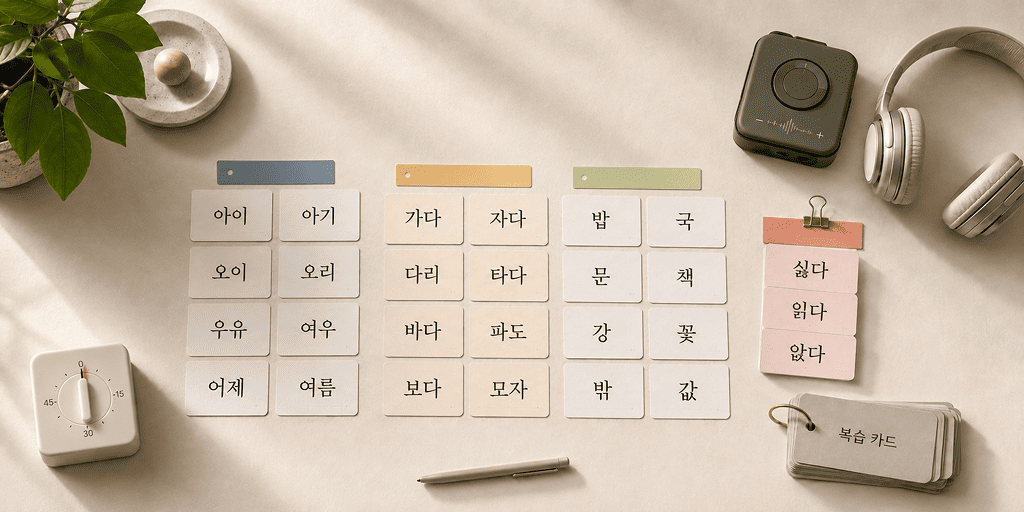
Hangul takes an afternoon to understand and months to read without guessing. The difference is what you put on the cards: real Korean words with audio, not isolated letters. Here is the order to learn them in, the mix-ups to expect, and a fifteen-minute daily loop.
French spelling looks friendly until you hear the word spoken. Here is how silent letters actually behave, and how to learn new French words from the sound so you do not memorize a version that does not exist.
Most learners recognize far more words than they can actually use. This article explains a simple two-direction method – target → native and native → target – and shows how My Lingua Cards helps you turn passive vocabulary into active speech.
Loading…
You're up to date. New stories will appear here soon.
We couldn't load more posts. Please try again in a moment.
By using our website, you agree to our Cookie Policy.



.png)