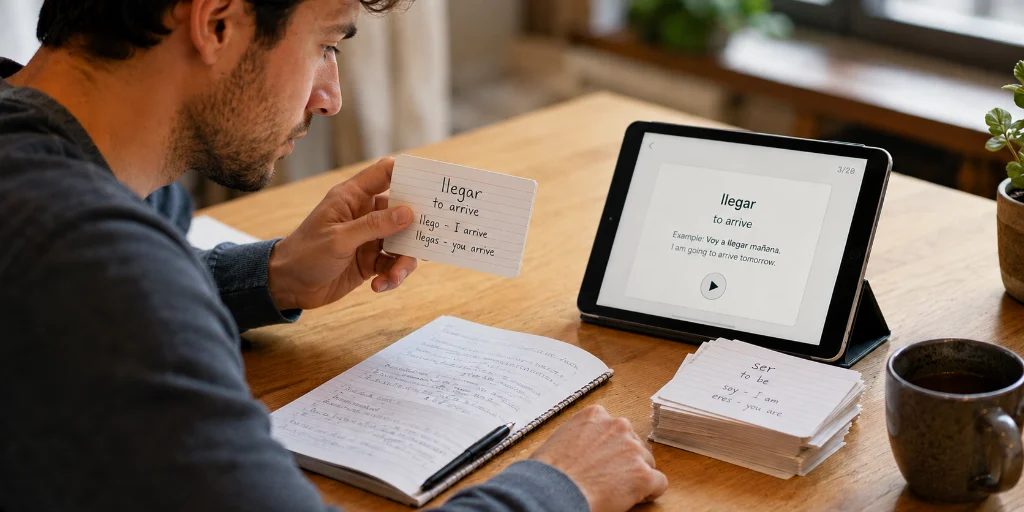
Digital vs Paper Flashcards: Which Works Better for Language Learning?
A practical comparison of digital and paper flashcards, including recall, pronunciation, review management, and a useful hybrid method.
Articles on vocabulary, memory, and effective language learning.
A practical comparison of digital and paper flashcards, including recall, pronunciation, review management, and a useful hybrid method.

When you produce an answer yourself, even with a hint, you remember it better than when you simply read it. What the generation effect is, what switches it off, and a 15-minute daily routine built around it.
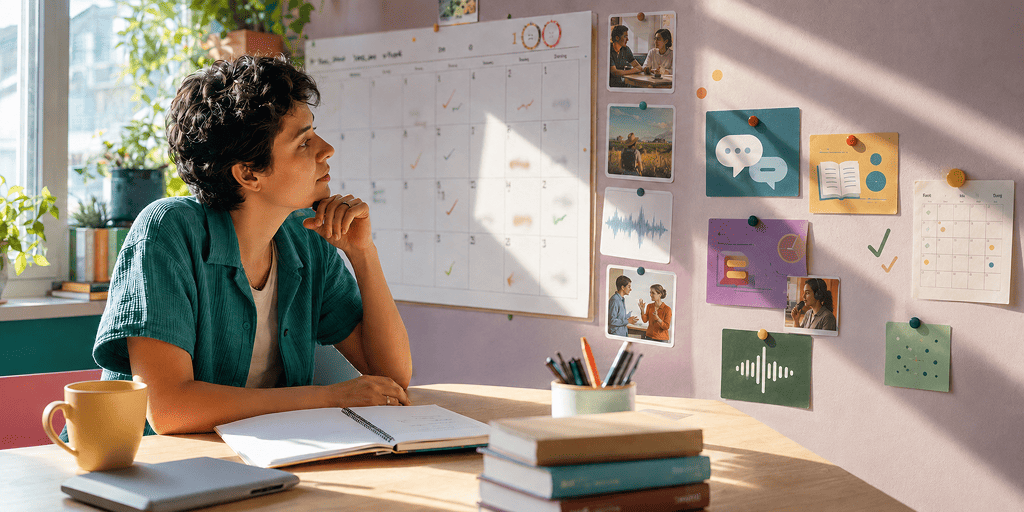
The forgetting curve explains why new words vanish if you never come back to them. It does not explain why a word you review faithfully still fails you in conversation. That part needs varied practice.
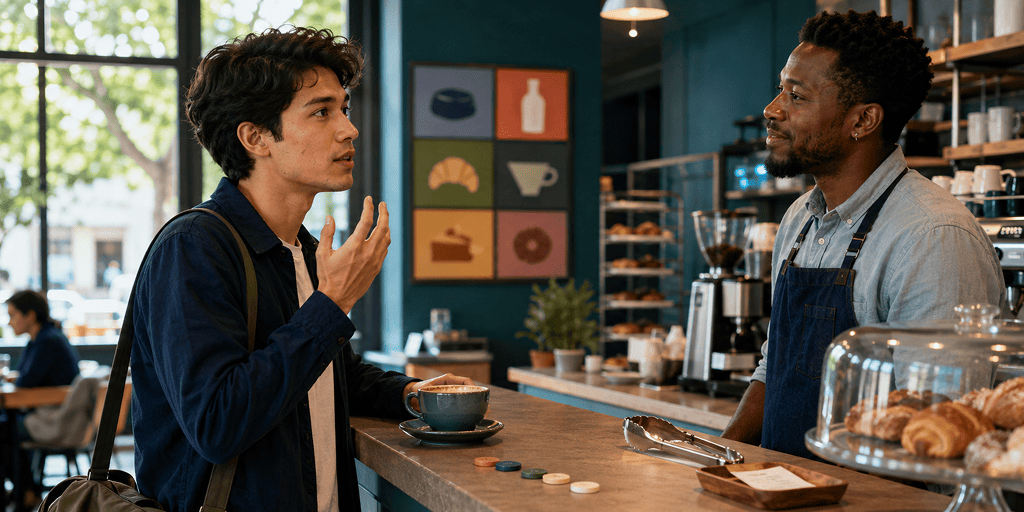
Most app comparisons argue about features. This one asks a narrower question: which tool actually leaves you with words you can say out loud? Here is where Duolingo, Memrise, Anki and Quizlet help, where they quietly fail, and when My Lingua Cards is the better fit.
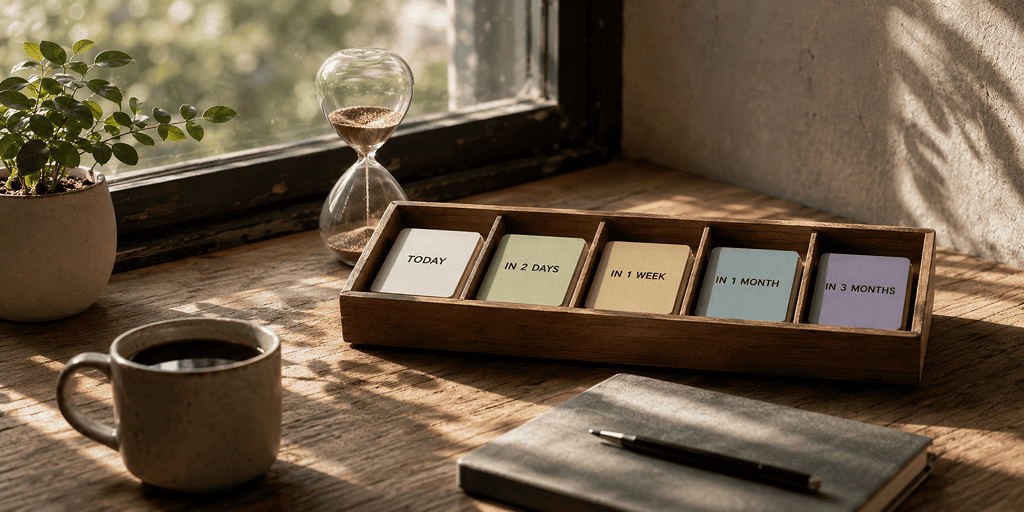
Most vocabulary methods feel productive while you use them and leave nothing behind a week later. Here is how the popular ones actually compare, and which one deserves to be your base.
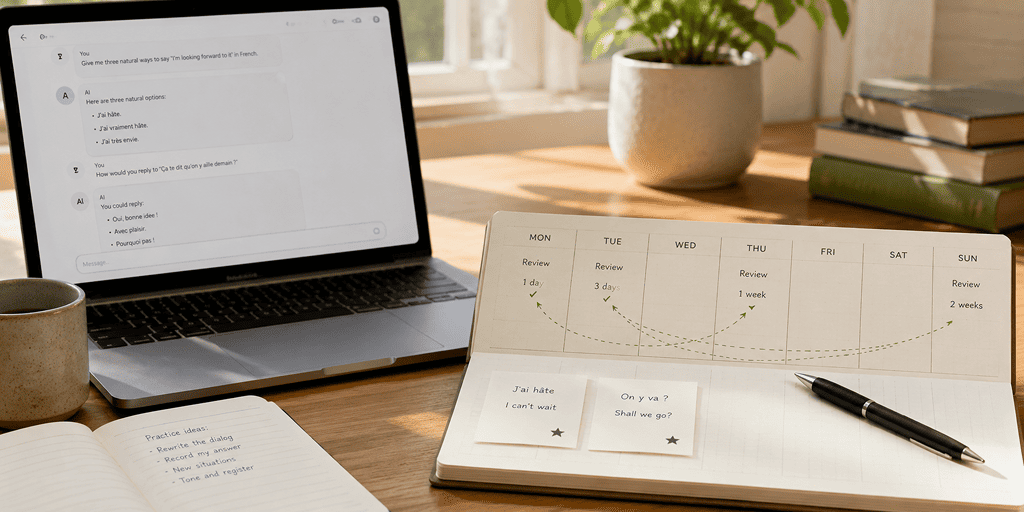
AI makes practice faster, easier and far less awkward. What it cannot do is memorize words for you, and that is the part speaking depends on. Here is how to use AI as a trainer for dialogues, examples and corrections, and how to turn what it gives you into vocabulary you can actually recall.
You're up to date. New stories will appear here soon.
We couldn't load more posts. Please try again in a moment.