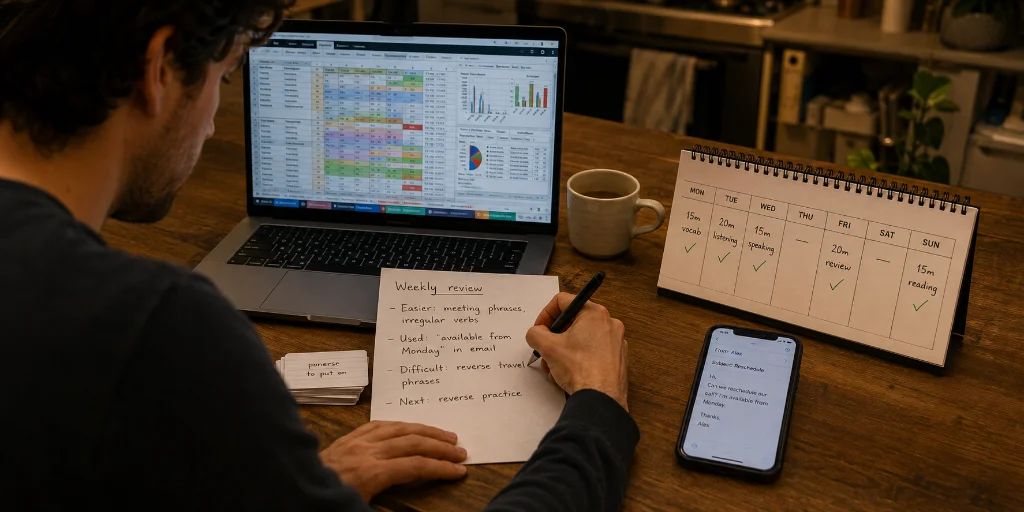
How to Track Language Learning Progress Without Overplanning
Track language learning progress with a simple weekly system based on recall, consistency, and real-world use instead of complex spreadsheets.
Články o slovní zásobě, paměti a efektivním učení jazyků.
Track language learning progress with a simple weekly system based on recall, consistency, and real-world use instead of complex spreadsheets.
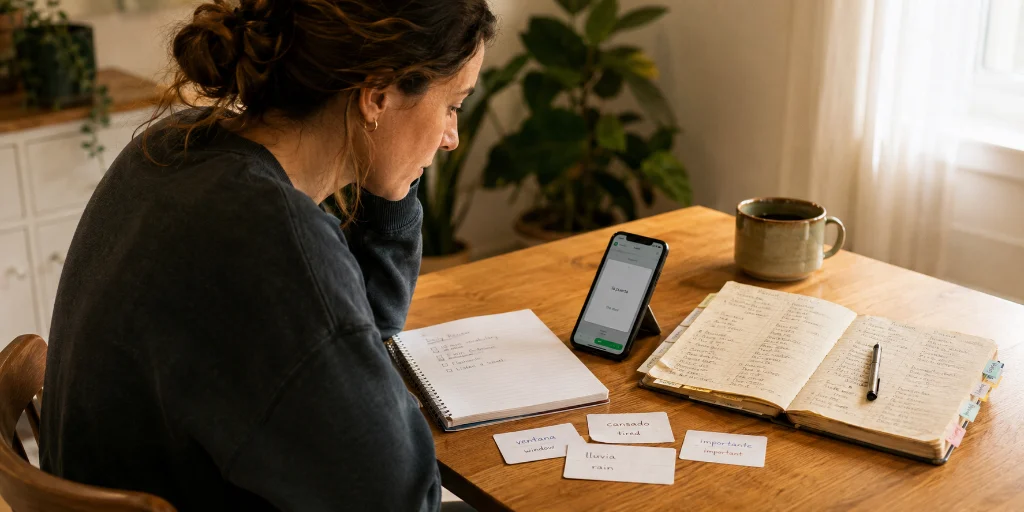
Restart language learning after a long break by recovering useful vocabulary, rebuilding active recall, and returning to a manageable routine without starting from zero.
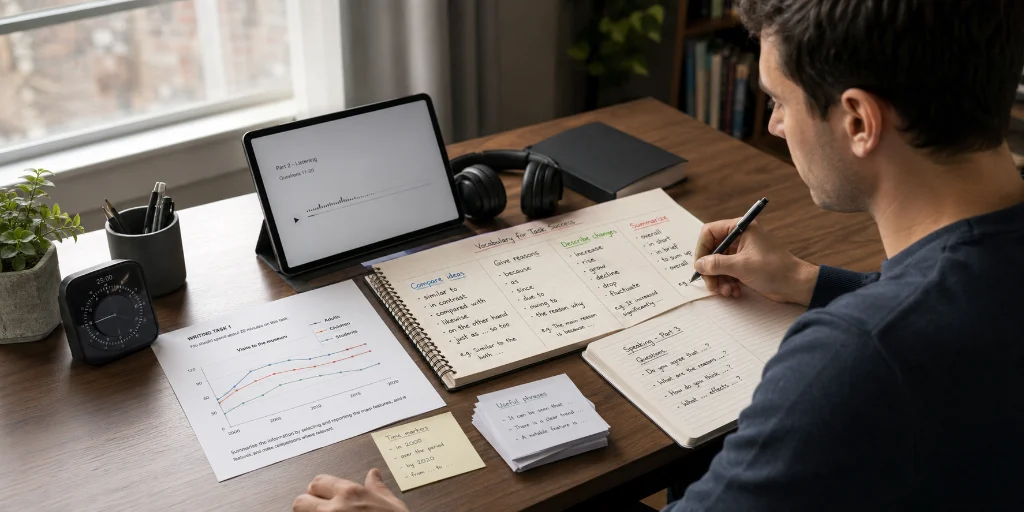
Learn how to build a focused exam vocabulary plan for reading, listening, writing and speaking without memorizing endless word lists.
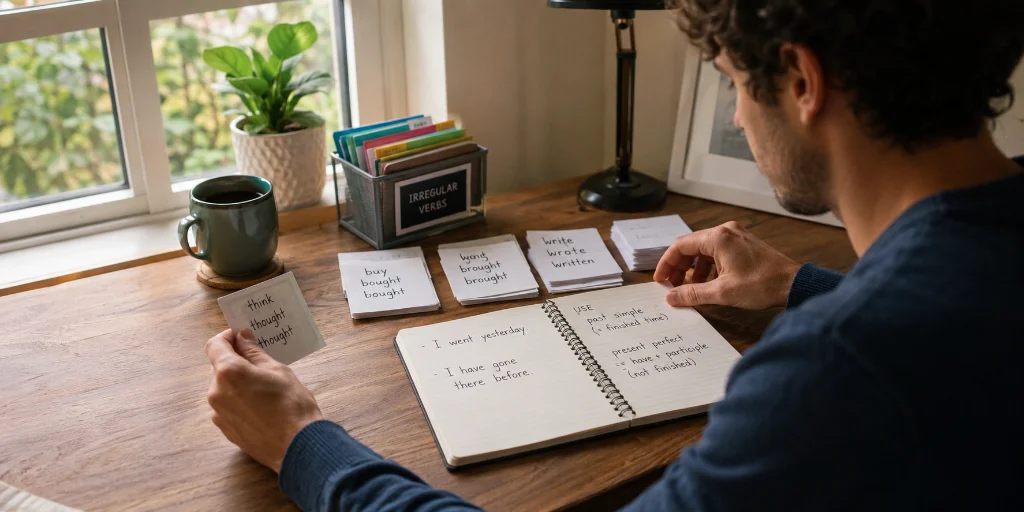
Learn irregular verbs in small pattern groups, practice them in context, and build reliable recall without memorizing an endless table.
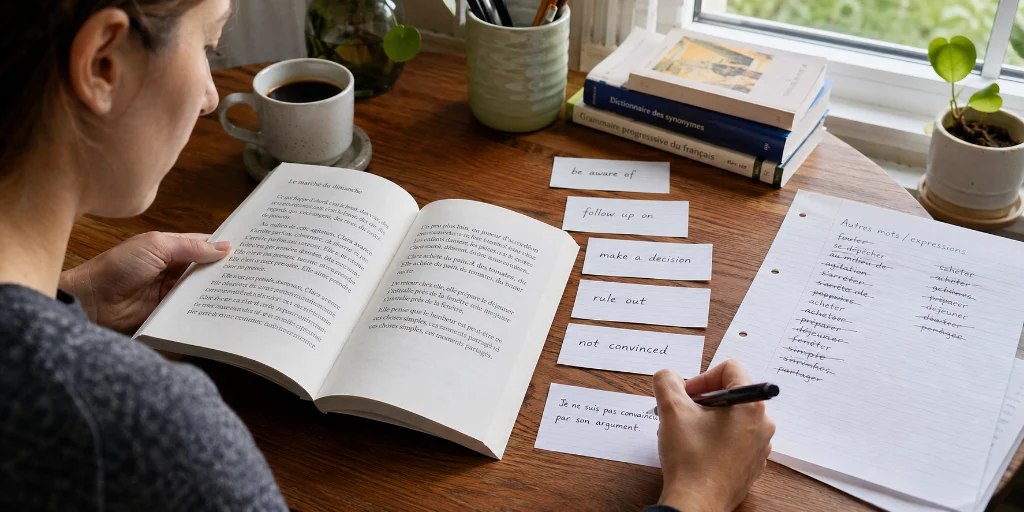
Learn how to choose useful words from books and articles, create better cards, and keep your vocabulary review load manageable.
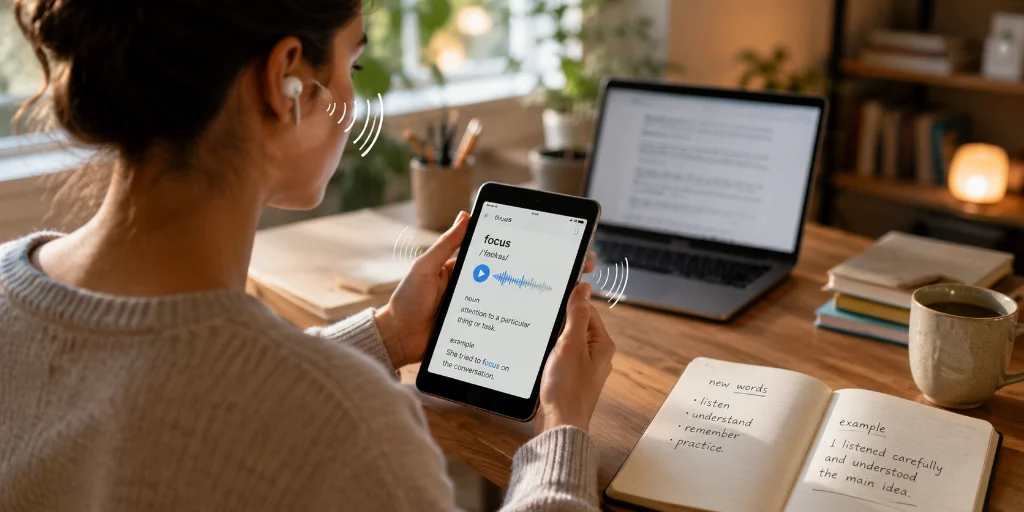
Learn how vocabulary practice can improve listening comprehension by strengthening sound recognition, context, and review speed.

Compare premade decks and custom flashcards, understand where each works best, and build a practical hybrid vocabulary system.
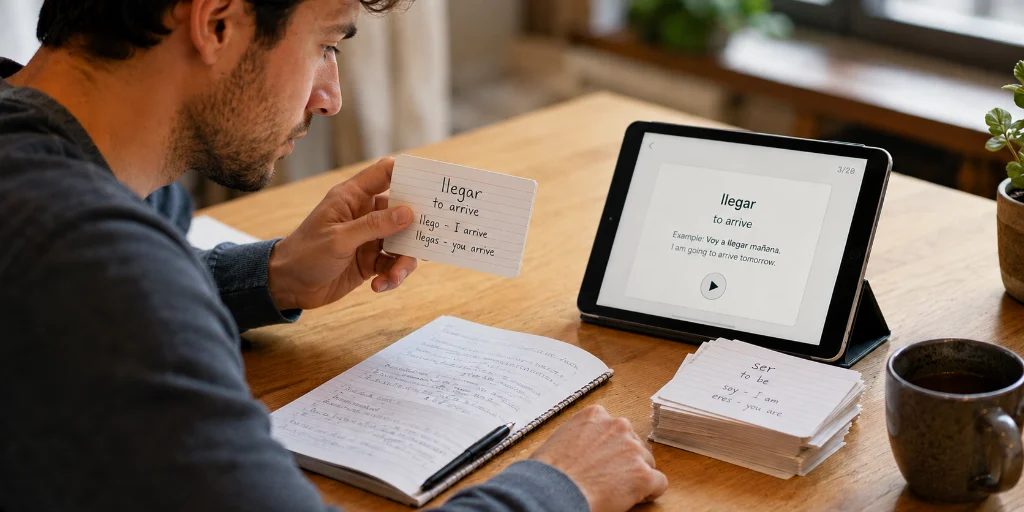
A practical comparison of digital and paper flashcards, including recall, pronunciation, review management, and a useful hybrid method.
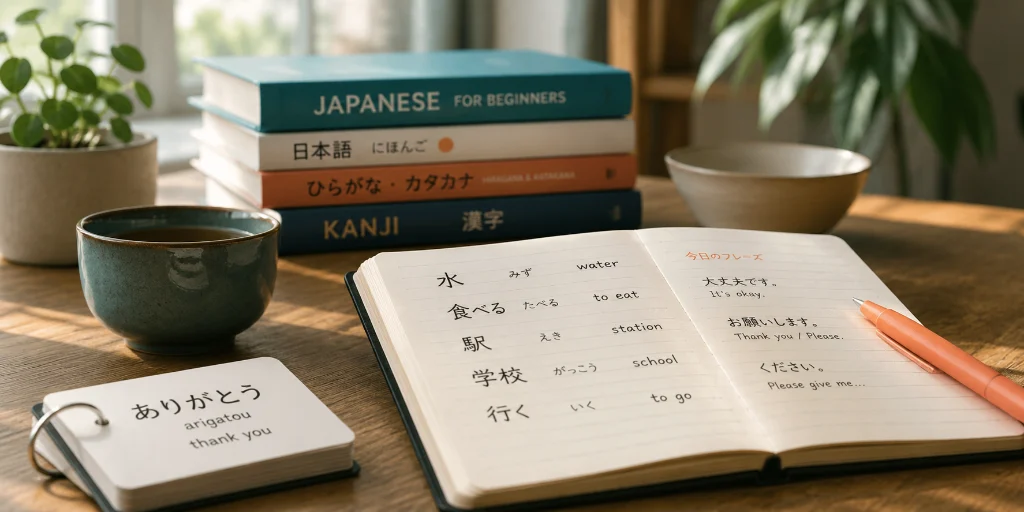
A practical beginner method for learning Japanese vocabulary through useful words, kana, kanji, audio, focused review, and active recall.
Máte přečteno vše. Brzy tu přibudou nové příběhy.
Nepodařilo se načíst další příspěvky. Zkuste to prosím znovu za chvíli.